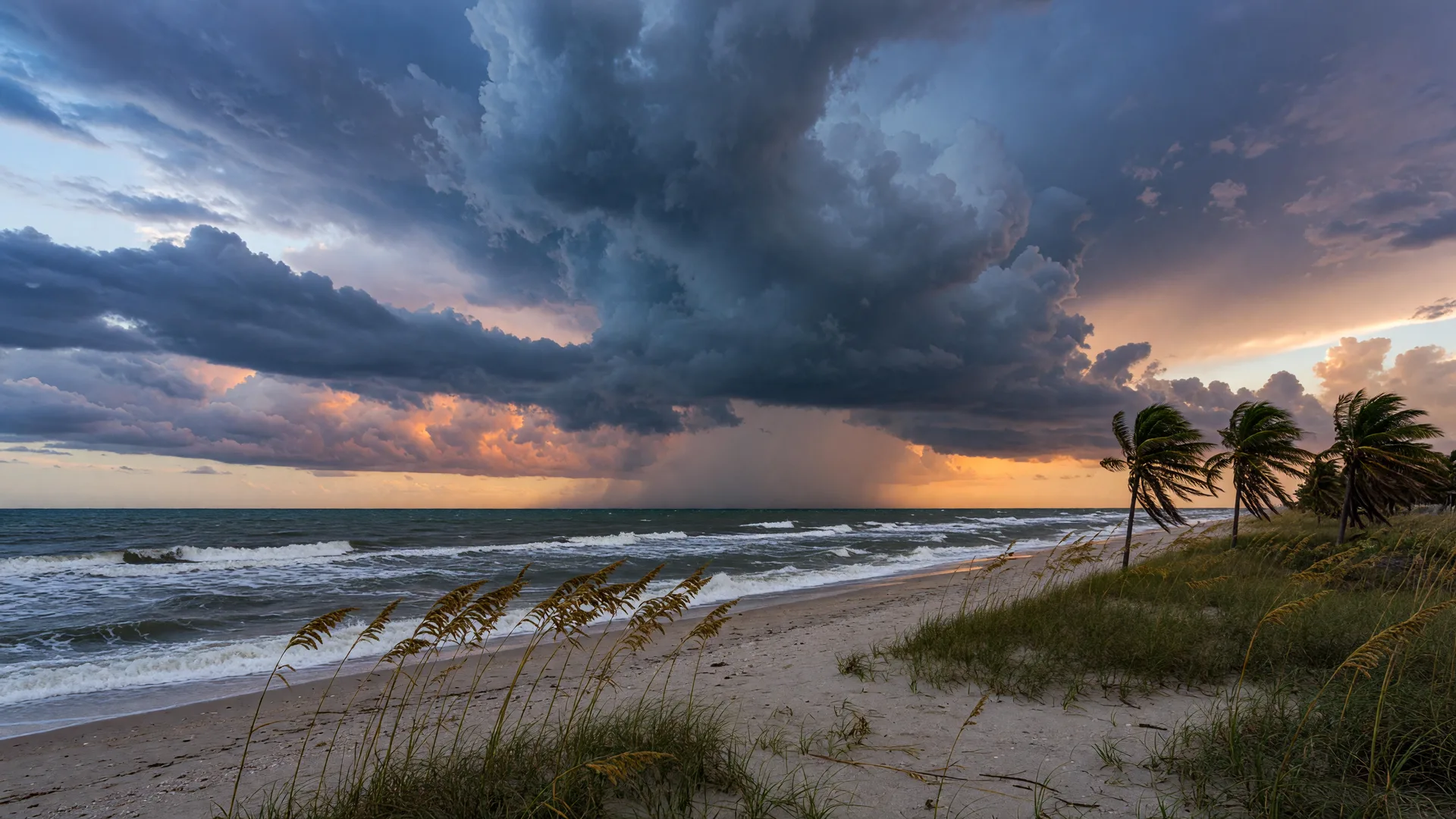
Hurricane season is usually the first question buyers ask when they look at Florida's Gulf Coast, and it deserves a straight answer: the season is real, and it does not have to be a dealbreaker. The buyers who handle it best treat it like any other part of due diligence, facts in hand before an offer. Here is what the season actually looks like, the two insurance costs that surprise people, and the checklist I run through with every coastal buyer.
The season runs longer than you think
The Atlantic hurricane season officially runs from June 1 through November 30, according to NOAA, but activity is not spread evenly. June is quiet, the season builds through the summer, and most named storms fall between mid-August and mid-October, with the peak around September 10. For buyers the practical takeaway is simple: plan closing dates and moving trucks with a September or October storm in mind.
Two insurance policies, not one
Standard homeowners policies do not cover flood damage. Flood insurance is a separate policy, most commonly through the National Flood Insurance Program, and it is effectively required in three situations: a home in a FEMA Special Flood Hazard Area (zones beginning with A or V) financed with a federally backed mortgage, a lender that requires it regardless of zone, or any policy through Citizens Property Insurance, where a flood coverage mandate is phasing in by home value and applies to every Citizens policy by January 1, 2027. NFIP building coverage tops out at $250,000, with contents capped at $100,000, so on higher-value Gulf Coast homes a private flood policy is often worth quoting too. Budget the monthly cost before you buy, not after closing.
A wind mitigation inspection can pay for itself
Florida Statute 627.0629 requires insurers to offer premium discounts when a certified wind mitigation inspection verifies wind-resistant features. The inspector checks roof covering and age, roof-deck attachment, whether the roof is hip or gable, and whether windows and doors are impact-rated or protected. Verified savings typically run $100 to $600 a year, with impact windows often worth $300 to $500 alone. Ask the seller for the report before you negotiate. If there is none, a few hundred dollars for the inspection is one of the best returns in coastal due diligence.
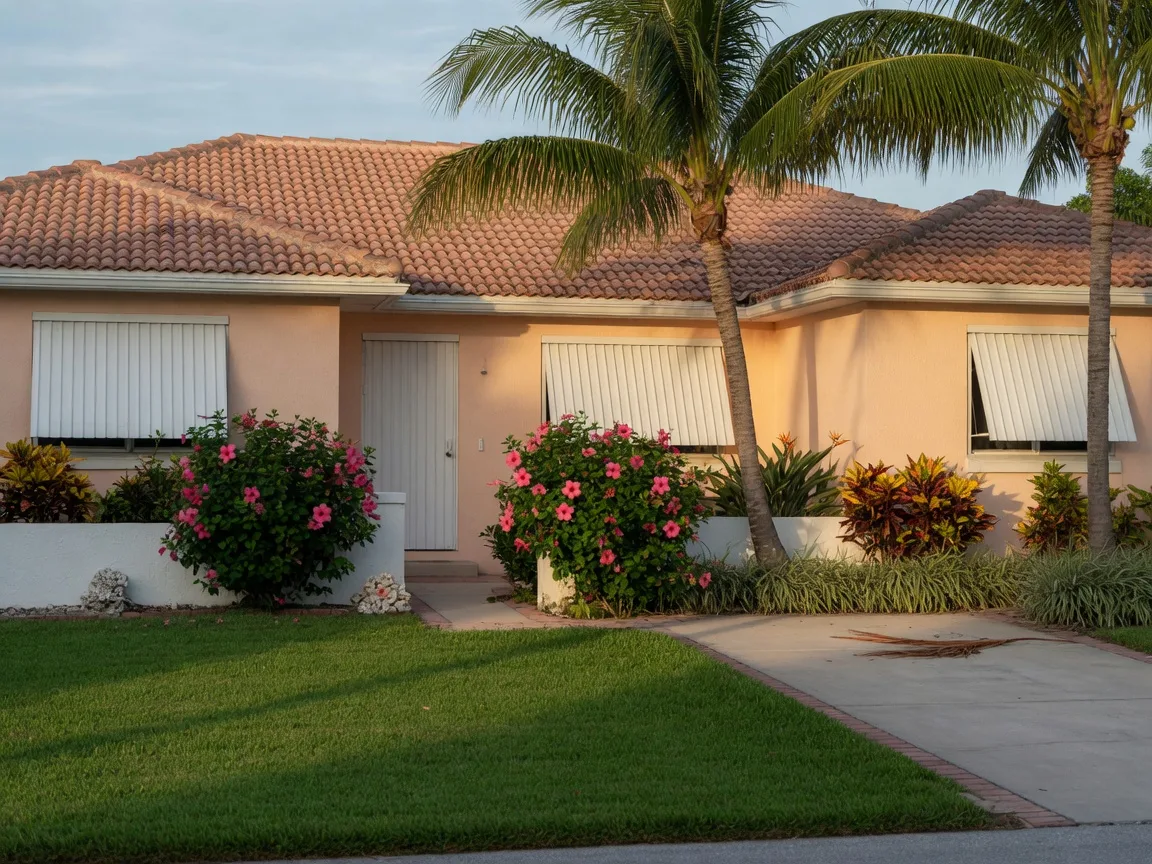
Accordion hurricane shutters closed on a Gulf Coast home, one of the features a wind mitigation inspection verifies.
Know your evacuation zone before you need it
Manatee County assigns every address an evacuation level from A to E, with Level A the most surge-vulnerable and evacuated first. All of Anna Maria Island, Perico Island, and Cortez sit in Level A, and low-lying shoreline along Palma Sola Bay falls in the A and B zones. Evacuation levels are not FEMA flood zones: one measures storm surge risk, the other flood risk. Look up your address on the county's Know Your Zone map before an offer, not the night a forecast turns.
What the 2024 season taught Gulf Coast buyers
Two hurricanes within two weeks in 2024 still shape every coastal conversation here. Helene came through on September 26 and 27, pushing surge deep into Manatee County's coast; Milton made landfall near Siesta Key on October 9 and 10 as a Category 3 storm roughly thirty miles from Anna Maria Island, knocking out power to about 75 percent of Manatee County customers. The homes that came through best were not lucky; they were better prepared and better built: newer or fortified roofs, impact glass or shutters, and elevation that kept water out. That is exactly what you are buying when you check these details.
The checklist before you make an offer
- Pull the FEMA flood zone and the property's elevation certificate.
- Ask for the roof age, the condition, and the wind mitigation report.
- Confirm impact-rated windows or a working shutter plan.
- Look up the address's evacuation level on mymanatee.org.
- Get homeowners and flood insurance quotes before you negotiate, not after.
None of this is a reason to skip the Gulf Coast, and I would not sugarcoat it: it is a reason to shop with a checklist. The right home in the right place, bought with the numbers known up front, is how you enjoy the beaches without losing sleep in September.
If you had to pick one hurricane-ready feature to prioritize, would it be the roof, the impact windows, or the elevation?
Tell me which one and why, and I will give you my honest take on how I rank them for Gulf Coast homes.

Roger Reed
Realtor, RAR Property Group | eXp Realty
I help buyers, sellers, and investors throughout Florida's Gulf Coast make smarter real estate decisions, including the storm-readiness homework every coastal purchase deserves. Licensed in Florida: SL 3407667.
Get in touchWant the full picture on storm readiness and what it means for your budget?
Send me a message or grab a quick call. I can walk you through insurance quotes, mitigation reports, and the neighborhoods where these details matter most.
Roger Reed · 941-402-0083 · roger@rarpropertygroup.com